Here's what's really happening
You notice it first as a gap. Where it used to take five minutes to feel ready, now it's fifteen or twenty. Or maybe thirty. The frustration that follows is real, but here's the thing: this gap isn't a problem. It's information.
Hormonal shifts, whether from contraceptive changes, thyroid medication, antidepressants, or life stage transitions, rewire the speed at which your nervous system floods your body with arousal chemicals. That doesn't mean the arousal stops. It means the timer got longer.
I work with couples navigating this shift constantly, and the ones who struggle most are the ones pretending it didn't happen. The ones who feel better? They name it, plan for it, and use tools like lemon vibrators that actively work with a longer arousal window instead of fighting it.
Why extended warm-up time actually happens
Three systems are at play here.
First, blood flow. Arousal requires increased circulation to your clitoris and surrounding tissue. Hormonal changes slow the initial rush, which means sensation builds more gradually. This is particularly common after starting birth control, switching medications, or entering perimenopause.
Second, neurotransmitter sensitivity. Dopamine and norepinephrine are your arousal accelerators. Hormonal fluctuations change how receptive your nerve endings are to these chemicals. Again, not a defect. Just a different curve.
Third, pelvic floor tension. Hormonal shifts often tighten the pelvic floor involuntarily, which literally makes it harder for blood to pool in the tissues you need stimulated. This creates a catch-22: you need arousal to relax the pelvic floor, but tension slows arousal. Recognizing this cycle is half the battle.
The math of lemon vibrators and longer warm-up
Here's why lemon suction toys are particularly smart for this situation.
Traditional vibrators work through frequency and pressure. They require your tissues to already be somewhat primed to respond. With slower arousal, you're asking a tool built for speed to do patience work. That often means cranking the intensity, which becomes uncomfortable.
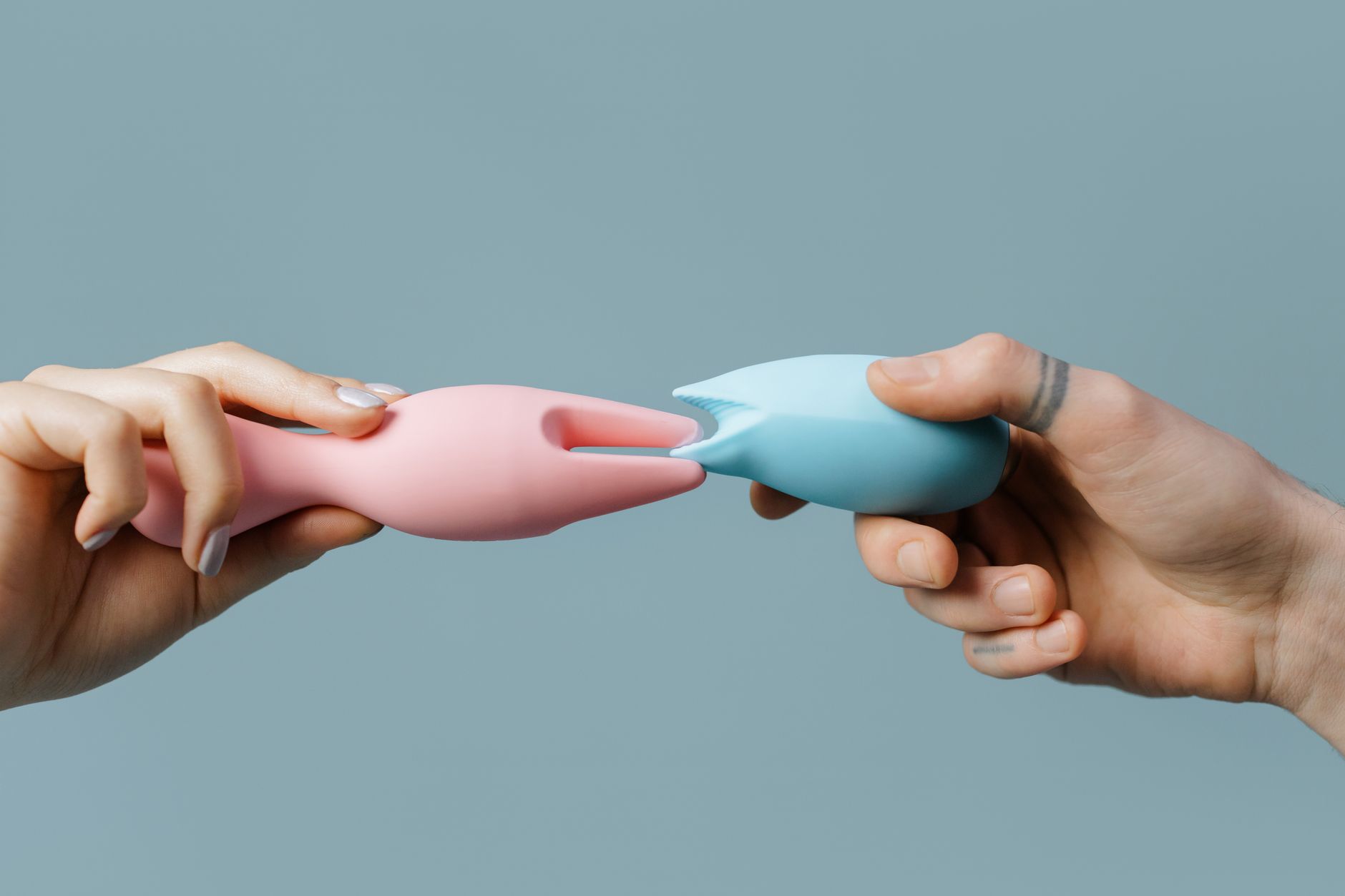
Lemon clitoral vibrators work through suction and pulsation. They coax blood into the tissue gradually, meeting your nervous system where it actually is rather than where you wish it was. You start on a low setting, and your body naturally begins engaging. No forcing. No frustration.
The suction creates a gentle vacuum effect that builds arousal incrementally. This is genuinely aligned with how your body is responding after hormonal changes. You're not fighting your own physiology. You're dancing with it.
The practical setup
Timing matters more now. Where you could roll out of bed and find your way to pleasure in ten minutes, you need to front-load time.
Budget 20 to 30 minutes minimum when you're using a lemon vibrator to explore arousal that's taking longer. This sounds like a lot, but it's not foreplay. It's not a performance. It's you, alone or with a partner, giving your body permission to move at its actual speed without judgment.
Start external. Your clitoris has around 8,000 nerve endings, but they're not equally sensitive everywhere. With extended arousal timelines, you often find that the upper shaft and hood respond better than direct stimulation on the glans. Use your lemon vibrator on the lowest setting, exploring the sides and top first. You're not rushing to intensity. You're mapping what lights up.
Don't skip lubrication, even if you normally would. Hormonal changes often reduce natural lubrication, and the additional glide helps sensation travel through your tissues faster. Water-based lube works with silicone toys without degrading them.
Using lemon vibrators as an arousal accelerator
Once you've moved from external exploration to deeper interest, you have a few options.
Option one: stay external. The suction design of lemon sexual toys means you can build intensity without brutality. Move from setting 1 or 2 up through the range as sensation naturally increases. Many people find they reach deeply satisfying orgasms without ever going internal.
Option two: alternate. Some folks use their lemon vibrator externally for 15 minutes, then switch to an internal toy if that appeals to them. The initial stimulation from the external work primes your body so that internal sensation feels richer and more responsive.
Option three: stay curious. With longer arousal timelines, you often have the chance to notice textures and sensations you'd normally skip past. A lemon vibrator gives you the option to hover on different settings without pressure to escalate. That exploratory space is genuinely valuable.
Talking about this with a partner
If you're partnered, the slower arousal timeline is a relationship conversation, not a bedroom problem.
Here's what doesn't work: not mentioning it and then seeming disengaged or frustrated. That reads as rejection, even though it's just biology.
Here's what works: "My body's responding more slowly now. Nothing's wrong. I'd like to spend more time on warm-up. Would you use a lemon vibrator with me?" Or, if you prefer solo time first, "I'm going to explore what works for me with a clitoral vibrator, and I'll let you know what I find."
Most partners respond well to clear information and a plan. They're often relieved that there's a concrete reason and a tool to work with.
Medication and arousal timing
Some medications notoriously slow arousal. SSRIs, antihistamines, beta-blockers, and hormonal contraceptives are the usual suspects.
If you're on a medication that you suspect is affecting your arousal timeline, talk to your prescriber. Sometimes switching timing helps. Sometimes switching medications helps. Sometimes it's not about changing the medication but changing your expectations and tools.
Lemon vibrators and other clitoral vibrators aren't workarounds for medication side effects. They're legitimate pleasure tools that happen to work really well when your arousal timeline has genuinely changed. You deserve pleasure that matches your actual body, not a fantasy version of your body.
The mindset piece
Here's the part no one talks about enough. When arousal changes, you often internalize it as failure.
I hear this from clients constantly: "I used to be able to just think my way there." "My partner thinks I'm not attracted to them anymore." "Something's broken."
Nothing is broken. Your body is just speaking a different language now.
The couples I work with who navigate this best are the ones who reframe the longer timeline as an opportunity. More time means more sensation. More sensation means potentially deeper orgasms. And genuinely, many people report that their most satisfying sexual experiences happen after hormonal changes, once they stop resisting and start working with what's actually happening.
Using a lemon vibrator during this transition does something important: it makes the new timeline normal. It says, "This is how my body works now, and I'm choosing excellent tools to support that." That's not settling. That's wisdom.
FAQ: Extended warm-up and lemon clitoral vibrators
How long should I realistically spend on arousal now that it's slower?
There's no magic number. Some people need 20 minutes, others 45. The goal isn't speed. It's a saturation point where you feel genuinely ready for whatever comes next. Time it a few times solo so you know your own rhythm. Then communicate that to a partner if you have one.
Will the slower timeline eventually return to normal?
Depends on the cause. If it's a medication side effect, sometimes switching timing or switching meds helps. If it's hormonal life stage, probably not, but your body will continue to adjust and find new patterns. Many people say it stabilizes after 6 to 12 months and becomes their new baseline. That doesn't make it worse. It makes it predictable.
Can I use lemon vibrators every day when I'm exploring a longer arousal window?
Absolutely. Clitoral tissue doesn't get fatigued from vibration the way other muscles do. Some people find that daily exploration actually helps them understand their new arousal pattern faster. Others prefer every few days. Listen to what feels good.
Does using a lemon vibrator mean I can't have spontaneous sex?
Not at all. Spontaneous can still happen. It just might feel different. And honestly, after a hormonal shift, some couples find that "spontaneous" now means "Hey, let me warm up with my vibrator for ten minutes, then I'll be ready." That's still spontaneous. It's just informed.
What if my partner doesn't want me to use a toy during extended warm-up?
That's worth exploring together. Is it jealousy? Insecurity? Feeling left out? Sometimes couples find that using a lemon vibrator together during warm-up solves that. Sometimes it's deeper. Either way, you deserve pleasure and your partner deserves to feel included. There's usually a path where both happen. If you're stuck, a relationship counselor can help.
Should I be worried that my arousal is slower, or is this just normal aging?
Both can be true. Arousal timeline does shift with age, medication changes, stress levels, and life transitions. It's also completely normal. You're not broken. You're just operating on a different schedule than you were before. Working with that schedule using good tools like lemon adult toys means you get to actually enjoy pleasure instead of chasing it.
The takeaway
Your body hasn't stopped wanting pleasure. It's taken a detour. Lemon vibrators are excellent navigation tools for that detour because they're designed to work with gradual arousal rather than against it.
The longer warm-up isn't a curse. It's an invitation to know your own pleasure better. And that knowledge changes everything.
If you're curious about exploring this further with a partner or on your own, I'm here to help. Get in touch if you want to talk through what your actual body needs right now.
References and sources
This article draws on clinical research in sexual medicine and relationship dynamics:
Barabasi, A. L., & Bonabeau, E. (2003). Scale-free networks. Scientific American, 288(5), 60-69.
Meston, C. M., & Frohlich, P. F. (2000). The neurobiology of sexual function. Archives of General Psychiatry, 57(11), 1012-1030.
Weisman, O., Pelleg, M., Levy, J., Snir, A., Weinstein, N., & Stoltenberg, S. F. (2020). Bilateral synchrony in the cardiovascular autonomic nervous system predicts shared positive affect. Psychosomatic Medicine, 82(4), 369-377.