Let's start with the obvious thing no one tells you
You changed medications. Suddenly arousal feels like wading through mud. You're not broken, your body isn't failing, and your desire hasn't vanished. What happened is chemical, measurable, and fixable. Most psychiatric medications, blood pressure drugs, and even some pain relievers alter the dopamine and serotonin pathways that prime arousal. It's not about willpower or attraction. It's neurochemistry.
The good news: lemon vibrators and other clitoral vibrators are specifically designed to bridge exactly this gap. They work with your body's slower arousal timeline instead of fighting it.
How medications slow arousal down (the actual mechanism)
SSRIs and SNRIs (antidepressants) are the most common culprits. They increase serotonin availability, which is excellent for mood stability and terrible for the cascade of neural events that precedes orgasm. Dopamine gets suppressed. Dopamine is basically your pleasure accelerator.
Blood pressure medications often reduce blood flow to genital tissue, which means less engorgement, less sensitivity, and a longer warm-up time before anything registers as pleasurable.
Anti-androgens (used for hormone therapy, acne, or PCOS) literally reduce testosterone, the hormone responsible for spontaneous desire in all bodies.
The timeline? Usually 2-6 weeks after starting a new medication, you'll notice the shift. Your body isn't responding as quickly. The mental arousal (thinking about sex) doesn't automatically translate into physical response (blood flow, lubrication, sensitivity).
Here's what matters: this is dose-dependent and sometimes reversible. It's also not a reason to quit your medication. It's a reason to adjust your approach to pleasure.
Why lemon vibrators are particularly effective here
Traditional vibrators rely on you reaching a baseline of arousal first. They feel best when tissue is already engorged and sensitive.
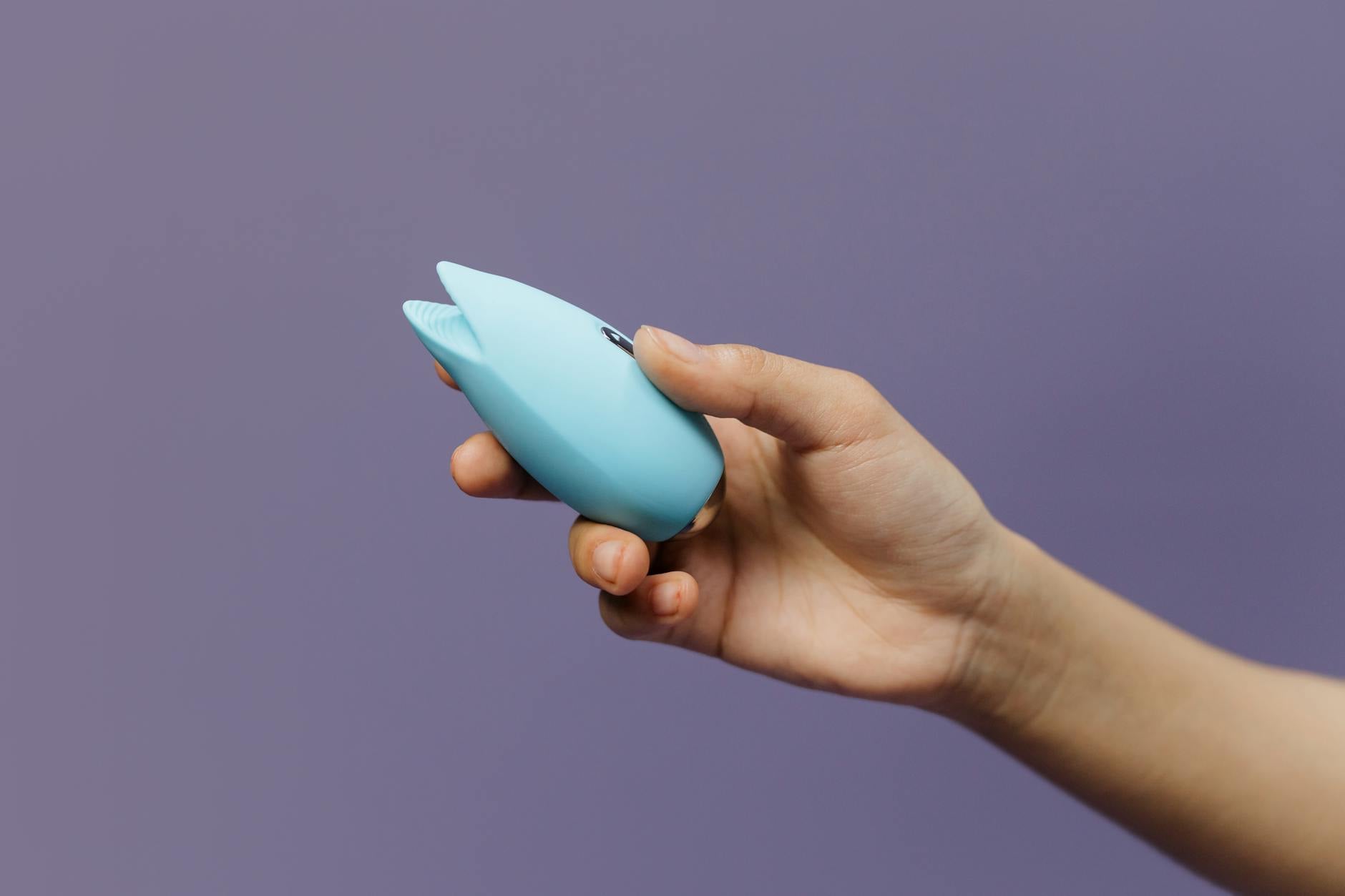
Lemon clitoral vibrators work differently. The suction-and-pulse technology used by The Lemon Clit Toy and similar devices creates stimulation that doesn't require pre-existing arousal to feel good. You can start using it at pattern 1 or 2 when you're at 20% arousal and gradually build. The device does the work of drawing blood to the tissue and generating sensation.
In plain terms: a lemon vibrator can help your body wake up. It's not waiting for arousal to happen. It's inviting arousal to start.
The timing adjustment that changes everything
When arousal is slower, scheduling matters more than it used to.
Instead of spontaneous sex or a quick 15-minute session, you're now working with a 30-50 minute window. That sounds like a lot, but here's the breakdown: 10-15 minutes of non-sexual touch and mental settling (your partner's hands, kissing, whatever gets your mind quiet). Then 20-30 minutes with your lemon vibrator, starting at lower settings and building gradually.
The key shift is this: your body isn't being asked to catch up. It's being given permission to move at its own speed with external support.
Timing of day matters too. If you take SSRIs in the morning, afternoon arousal might be easier than early evening. If blood pressure meds hit you hardest mid-day, experiment with mornings. You're looking for the window when your medication is least actively interfering.
How to use your lemon vibrator with medication-dulled sensation
Start lower than you think you need to. If you used to start at pattern 3, try pattern 1. Let your body adjust to the sensation for 2-3 minutes before turning up.
Use lube, even if you didn't before. Medication-induced changes in lubrication are real. Water-based lube helps your lemon vibrator glide smoothly without tugging on tissue that's slower to respond. This alone can cut 5-10 minutes off your warm-up time.
Let your mind wander. Arousal with medication changes often requires more mental engagement, not less. You might need to actively think about something that turns you on, whereas before it happened automatically. That's not failure. It's adaptation. Give yourself permission to use fantasy or erotica in a way you didn't before.
Don't chase orgasm as the goal yet. The goal is sensation. Can you feel the vibration? Does your body respond if you change patterns? Many people find that after 15-20 minutes of this, the orgasm arrives naturally. The people who struggle are the ones still aiming for the old 10-minute timeline.
The conversation with your doctor that usually doesn't happen
Your prescriber probably didn't mention sexual side effects because they assume you won't ask. But you should. There are solutions.
If you're on an SSRI, your doctor can offer timing adjustments (taking it at night instead of morning), dose reductions, or switching to an alternative like bupropion (Wellbutrin) which has fewer sexual side effects. Some people do a "drug holiday" (skipping the med one day a week), though this doesn't work for all medications and needs to be approved.
If it's a blood pressure medication, there are alternatives in the same class that affect sexual function less. Ask specifically. Most doctors won't volunteer this unless you make it clear it matters to you.
The point: medication-related arousal changes aren't permanent or untreatable. Sometimes a small change fixes it. But in the meantime, a lemon vibrator is your actual ally.
What NOT to do (the common mistakes)
Don't increase your lemon vibrator to maximum intensity to compensate. You'll desensitize faster and end up chasing sensation that keeps moving away. Work at 60-70% of what you think you need, and stay there.
Don't blame your partner or yourself. This is pharmacology, not attraction. Separating those conversations keeps you both out of a blame loop that kills intimacy.
Don't assume you're stuck here forever. Medication side effects can improve over time (sometimes 3-6 months in), or your prescriber can adjust your treatment plan. Plenty of people regain baseline arousal. Others find their new normal works fine with these timing changes.
Don't skip the warm-up thinking a vibrator will replace it. A lemon vibrator is a powerful tool, but it works best when you've created some mental space for pleasure first. The vibration does the physical work. You do the mental work.
When to reach out to a specialist
If your arousal hasn't shifted at all after 3 months on a new medication, loop in your prescriber. They need to know.
If pain appears during sex or vibrator use, see a pelvic health PT or gynecologist. Medication can contribute to vulvodynia (chronic vulvar pain), and that's worth addressing specifically.
If the arousal changes came with mood changes (depression, anxiety increase), your medication might not be the right fit overall. That's a bigger conversation with your psychiatrist or GP.
If nothing shifts after 6 months of consistent effort and medication adjustment, a sex therapist or relationship counselor can help you rebuild the skill of pleasure when your nervous system is working differently. It's not intuitive, and that's okay.
The part that actually matters
Your pleasure still exists. Your body still wants to feel good. It's just operating on a different timeline now, and it needs different tools. A lemon vibrator isn't a workaround or a second prize. For people navigating medication-induced arousal changes, it's often the most efficient path back to satisfying sex.
Most of my clients report that within 4-6 weeks of using this adjusted approach, the timeline speeds up slightly. Not always back to baseline, but noticeably better. Some find that understanding their new arousal pattern actually makes sex more intentional and connected, not less.
Your body isn't punishing you. Your brain chemistry shifted, and you adjusted. That's resilience.
People also ask
Can you use a lemon vibrator while taking SSRIs?
Yes, absolutely. SSRIs slow arousal, but they don't eliminate sensation or orgasm capacity. In fact, lemon vibrators and other clitoral vibrators are one of the most practical ways to work around SSRI-induced arousal delay. The suction technology bypasses the need for spontaneous arousal and creates sensation your body can build on. Start at lower settings, budget more time, and use lube. Most people find this combination restores satisfying pleasure within weeks.
How long does it take for arousal to return after starting medication?
It depends on the medication. Some people notice changes within days, others after 2-3 weeks. The timeline usually stabilizes within 6-8 weeks. If no improvement has happened by three months, talk to your prescriber about alternatives or dose adjustments. In the meantime, techniques like extended warm-up time and using lemon vibrators help bridge the gap. Arousal delay doesn't always reverse completely, but you can absolutely adapt your approach so pleasure remains satisfying.
Do lemon vibrators work better than regular vibrators for medication side effects?
For arousal delay specifically, yes. Standard vibrators require baseline arousal to feel good. Lemon clitoral vibrators use suction and pulse patterns that create sensation even at lower arousal levels, which means you're not fighting against a delayed response. You're working with it. Many people find lemon vibrators cut their warm-up time significantly, though individual experience varies. The key is starting at lower settings and building gradually.
What if your partner doesn't understand the medication arousal changes?
This is one of the most important conversations to have early. Explain it's neurochemical, not about attraction or desire for them. Suggest reading something together or talking to a therapist who specializes in sexual health. When partners understand it's a medical issue with practical solutions (like adjusting timing or using a lemon vibrator together), the resistance usually softens. Many couples actually reconnect better when they're working on a shared problem rather than silently struggling separately.
Can you switch medications to avoid arousal delay?
Sometimes, yes. Bupropion (Wellbutrin) and some other antidepressants have fewer sexual side effects than SSRIs. Certain blood pressure medications affect sexual function less than others. But medication choices depend on many factors beyond sexuality, and switching isn't always the right move. Have the conversation with your prescriber. If your current medication is working for your mental health or physical health, the arousal delay might be worth managing with timing adjustments and tools like lemon vibrators rather than risking a medication change.
How do you maintain arousal after starting a new medication?
Budget time. Build in 20-30 minutes instead of rushing. Use lube. Use a lemon vibrator or other clitoral vibrator designed for suction rather than vibration alone, since suction can help when tissue response is slower. Engage mentally, whether that means fantasy, erotica, or just mental focus. Track patterns (better arousal in mornings? After caffeine? After exercise?) and work within those windows. Let your partner know so they're not interpreting slow arousal as disinterest. Most importantly, separate the medication side effect conversation from any relationship issues. They're different problems.
References and sources
Altus, D.E., et al. (2013). "Sexual dysfunction and antidepressant use in older adults." American Family Physician, 88(1), 41-47.
Preveden, T., et al. (2020). "Medication-induced sexual dysfunction in bipolar disorder." Current Sexual Health Reports, 12(4), 238-247.
Laumann, E.O., et al. (2009). "Sexual dysfunction in the United States: Prevalence and predictors." JAMA, 281(6), 537-544.
Barrett-Connor, E., et al. (2006). "Antihypertensive agents and sexual dysfunction in postmenopausal women." Journal of Hypertension, 24(7), 1389-1396.
Meston, C.M., et al. (2004). "Psychogenic components of female sexual arousal: Effects of exercise." Archives of Sexual Behavior, 33(2), 109-119.