When pain rewires your nervous system
Pain during sex does something insidious. It doesn't just hurt in the moment. It teaches your nervous system to brace, to anticipate hurt, to treat pleasure itself as a threat. Even after the physical injury heals, your body remembers. Your mind pulls away before your body even has a chance to respond.
Rebounding from painful sex isn't about forcing yourself back into old patterns. It's about rebuilding trust in your own body, one safe sensation at a time.
Why pain changes everything about arousal
When you've experienced pain during sex, your brain does its job perfectly. It flags the context as dangerous. Your pelvic floor tenses preemptively. Arousal gets harder to access because your body is busy protecting you. Desire itself can feel impossible when intimacy has become synonymous with discomfort.
This is why penetration-focused recovery often fails. You're asking your nervous system to relax into the exact scenario that hurt it. That's neurologically backwards.
Clitoral pleasure works differently. The clitoris is external, controllable, and entirely within your power. When you use lemon vibrators—whether the full Lem or another lemon sexual toy—you're reclaiming a form of pleasure that doesn't trigger the same protective bracing. You're teaching your nervous system that touch can be safe, that arousal can exist separately from pain, that your body can respond without fear.
How lemon vibrators rebuild sensation safely
Lemon clitoral vibrators use suction technology, not friction. This matters tremendously when you're recovering from painful sex.
Friction-based toys can feel sharp, overwhelming, or triggering on sensitive tissue that's already been through trauma. Suction is gentler in the beginning, more gradual, easier to control. You're not forced into intensity. You set the pace.
Start with the lowest pattern. Pattern 1 or 2 on a lemon sucker creates a rhythmic pulse that feels less like direct stimulation and more like a series of micro-sensations. Many people who've experienced pain find this rhythm is what finally allows their nervous system to relax. The pulsing interrupts the tension cycle. It gives your brain something to track that feels good instead of dangerous.
This is deliberate, methodical pleasure. Not rushed. Not pushed toward an outcome. Just your body remembering what sensation without fear feels like.
Building sensation back in stages
Rebuild pleasure the way you'd rebuild anything else. Start small. Increase slowly.
Week 1-2: Sensation awareness. Use your lemon vibrator for 10-15 minutes with no pressure to orgasm. Set it to pattern 1. Pay attention to how your body responds. Notice where sensation feels easiest, where it feels like you're bracing. This is information, not failure.
Week 3-4: Exploring patterns. Once pattern 1 feels comfortable, try pattern 2. Notice the difference. Some people find certain patterns feel safer than others. Your job is to map this. Which patterns create relaxation? Which feel like too much?
Week 5-6: Adding context. Introduce your lemon vibrator into partnered sessions if you're ready. Your partner's job is not to touch you—it's to create safety. They might be present in the room, or they might give you space. You control what "present" means.
Week 7+: Integrating desire. Once arousal starts building without fear, pleasure can start building toward orgasm. But you're not chasing that. You're allowing it to emerge naturally from the fact that your nervous system finally trusts sensation again.
This timeline isn't universal. Some people move faster. Some need more time. The point is that you're not trying to skip steps. You're not trying to want penetration before you've rebuilt your relationship with your own clitoris. That's the real recovery.
Managing the grief underneath
Rebounding from painful sex often sits on top of other losses. Loss of spontaneity. Loss of how sex used to feel. Loss of confidence in your body. Grief in your partnership if your partner didn't understand what you needed during pain.
Using a lemon vibrator isn't just physical recovery. It's also emotional permission. It's a way of saying to yourself. "My pleasure matters enough to take this seriously. My recovery matters. I'm worth the time this takes."
If you're in a partnership, this is a good moment to name that grief together. Not in the bedroom. In conversation. Your partner needs to understand that rebuilding confidence after pain is not about them being rejected. It's about you rebuilding something that got broken. When they understand that, they can support it instead of feeling threatened by it.
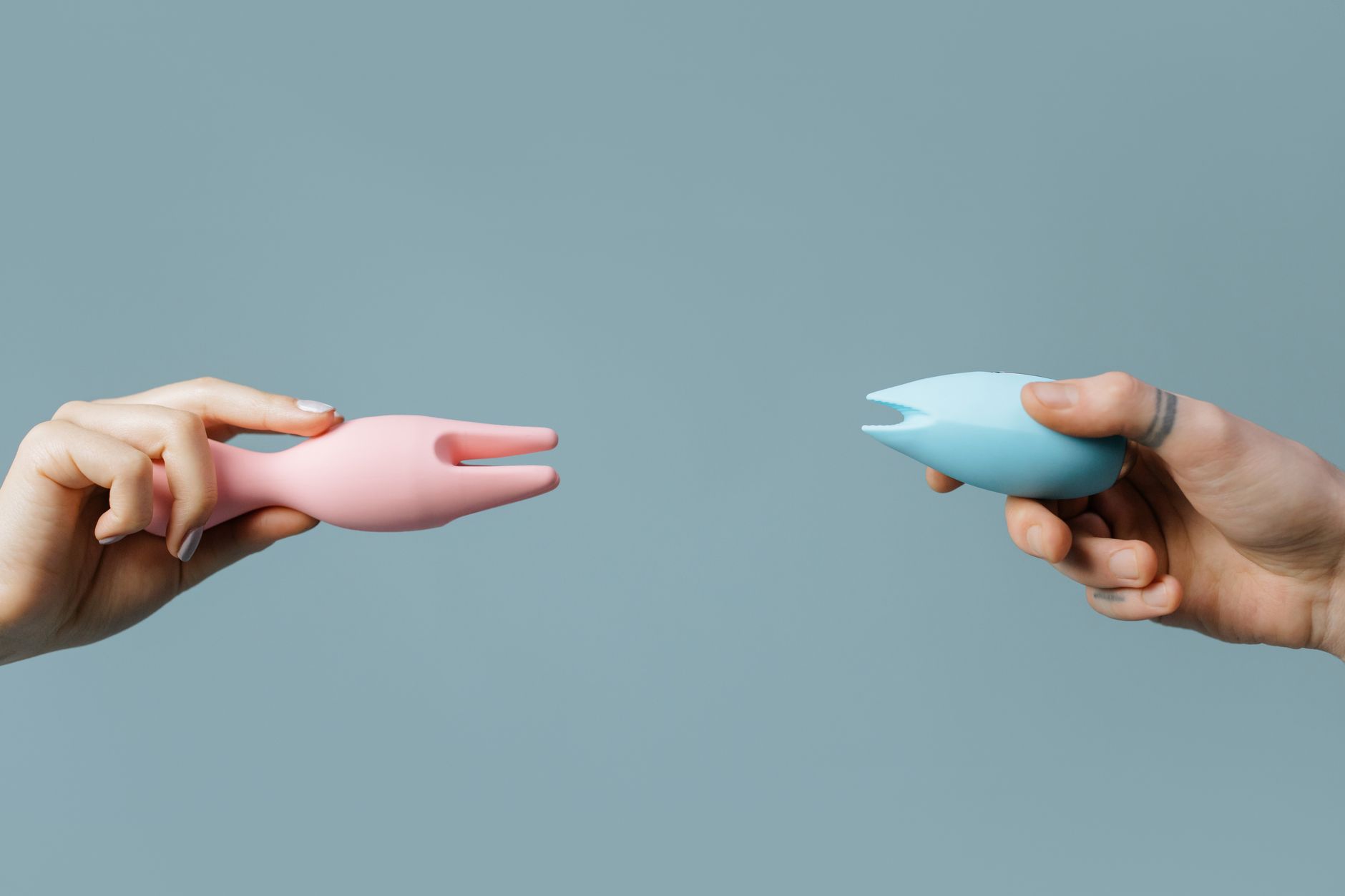
Photo by cottonbro studio on Pexels
When to bring a partner in
There's no fixed timeline. You'll know it's right when you stop using your lemon vibrator as an escape from partnered intimacy and start thinking about it as part of it.
When you're ready, involve your partner in this conversation before you're in bed. Tell them what you need. Maybe that's: "I want to use my vibrator while you're next to me, and I don't want you to touch me." Or: "I want to show you what feels good to me now." Or: "I need you to listen without trying to fix anything."
Partners who understand this actually report it deepens their intimacy. They're not performing. They're witnessing their partner reclaiming pleasure. That's profoundly different from the dynamic that often leads to painful sex in the first place.
The role of external support
If pain during sex was severe or recent, a trauma-informed therapist is worth the investment. You don't need to process the pain for years. But 4-6 sessions with someone who understands nervous system recovery can accelerate everything. They can help you name what happened, understand your body's protective responses, and build confidence in your own judgment.
A pelvic floor physical therapist is also valuable. Some pain during sex originates in muscle tension, scarring, or structural factors that a vibrator alone won't address. A good PT can identify what's physical and what's nervous-system-based. Both are real. Both are treatable. And lemon clitoral vibrators work best when you know what you're recovering from.
Pleasure as reclamation
Using lemon vibrators after painful sex isn't about proving something to your partner or to yourself. It's about reclaiming a basic human right. Your body deserves to experience pleasure without fear. That's not selfish. That's sanity.
Start wherever you are. If pattern 1 is all you can manage this week, that's the right place to start. If you need to stop mid-session because something triggered you, that's data, not failure. Your nervous system is learning that you listen to it. That you won't push it into old patterns of harm.
Confidence rebuilds one safe sensation at a time. Using a lemon vibrator is how you collect those sensations. How you remind your body that touch can lead somewhere good.
FAQs about lemon vibrators and rebuilding after pain
Can I use a lemon vibrator if penetration still feels impossible?
Yes. In fact, start here. Clitoral pleasure doesn't require penetration, and rebuilding confidence clitorally often makes future penetration possible because your nervous system is no longer in protection mode. Use your lemon vibrator solo until arousal feels natural and orgasm feels achievable. Penetration can come later, or not at all—your pleasure doesn't require it.
How often should I use my lemon vibrator during recovery?
Two to four times a week is ideal. Enough to create new neural pathways around pleasure, not so much that it feels like homework. If you're using it daily to numb or dissociate from pain, that's different—that's avoidance, and it's worth naming with a therapist. The goal is integration, not escape.
What if my lemon vibrator feels overstimulating at first?
Lower the intensity further, or use it over underwear or a thin fabric. You're teaching your nervous system to trust sensation gradually. You don't have to feel maximum sensation. You have to feel safe sensation. Those are different things. As your nervous system relaxes, direct contact usually becomes easier.
Should I tell my partner I'm using a lemon vibrator?
That's your call, but honesty usually serves the relationship better. If you're hiding it because you're ashamed, that's worth examining. You're recovering from pain. Using a tool that helps you reconnect with pleasure safely is not shameful. If you're hiding it because you're afraid of your partner's reaction, that's a different conversation—one that might need a couples therapist.
Can a lemon vibrator replace the need for healing from painful sex?
No. A lemon vibrator is a tool, not therapy. It's incredibly useful for rebuilding sensation and confidence, but it works best alongside other support. If the pain was severe, or if you're experiencing ongoing anxiety around sex, professional support accelerates recovery. Think of the vibrator as a practice ground and therapy as the map.
How do I know when I'm ready to try penetration again?
When you're using your lemon vibrator regularly and arousal feels natural—not forced, not anxiety-driven, actually present in your body. When you can orgasm or reach high arousal without bracing or dissociating. When the thought of penetration doesn't trigger immediate tension in your pelvic floor. You don't have to rush this. Many people find that once clitoral confidence is restored, the rest follows naturally.
Moving forward
Recovering from painful sex is not linear. Some weeks you'll feel amazing. Some weeks you'll notice old tension returning and wonder if you've lost progress. You haven't. Your nervous system is learning. Learning is messy.
Using a lemon vibrator is one part of that learning. It's how you remind your body that sensation can be good. That pleasure is still available to you. That your nervous system can relax again.
Start with one session this week. Pattern 1. No goals. No outcomes. Just your body, your lemon clitoral vibrator, and the simple act of remembering that touch can be safe. Everything else follows from there.
If you'd like to explore this with support, reach out. I'm here to help you rebuild not just sexual confidence, but the deeper trust in your own body that makes pleasure possible. That's the real recovery.